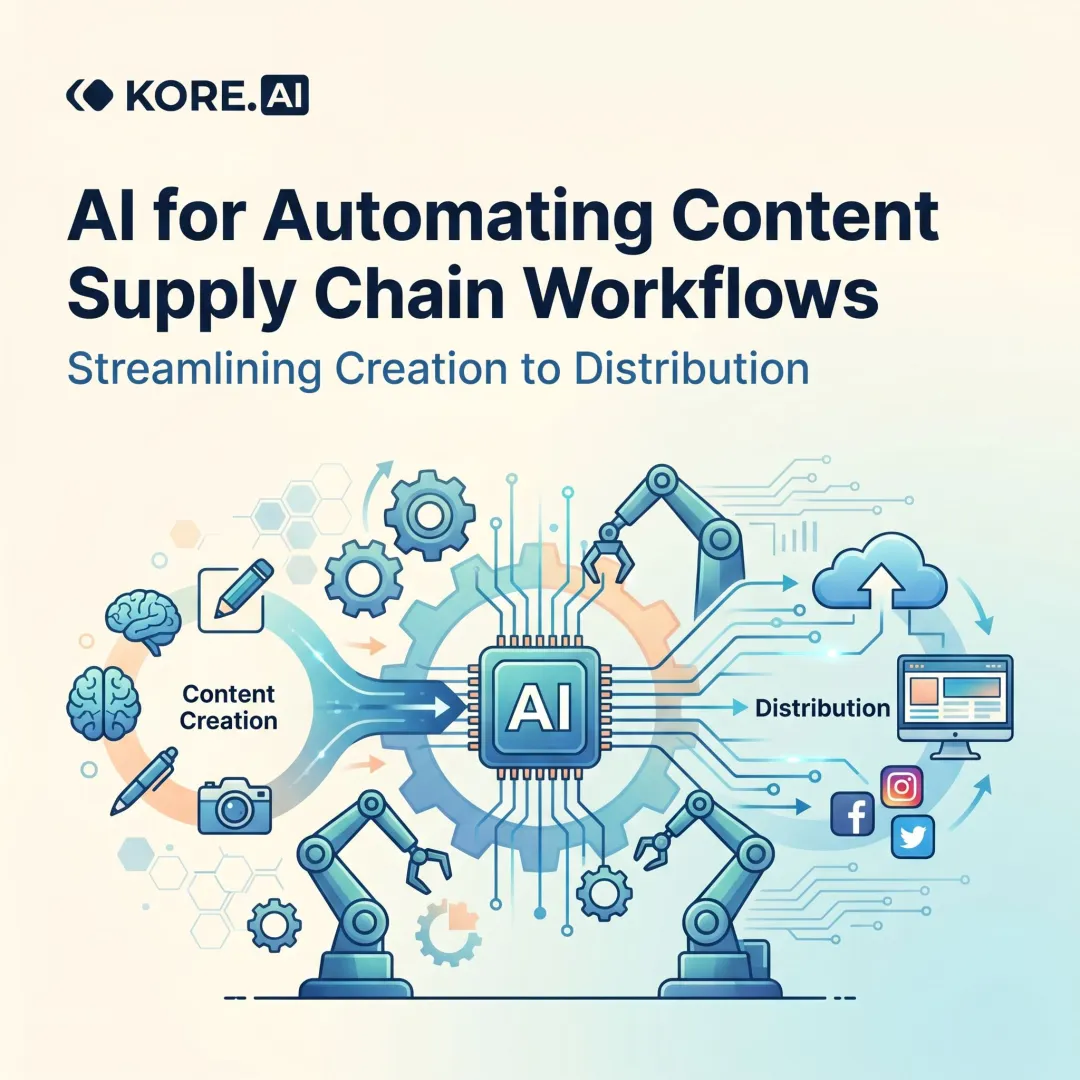
- AI content automation systematises the entire content lifecycle—from ideation through distribution and analytics—eliminating manual handoffs that slow traditional workflows
- Content demand rose 93% year-over-year while only 27% of marketing teams expect headcount growth, making automation the only viable path to closing the capacity gap
- Organisations with high automation maturity are 24% more likely to meet content demands and 20% more likely to generate qualified leads
- AI Overviews have reduced organic click-through rates by 58%, making GEO (Generative Engine Optimization) a required discipline alongside traditional SEO
- Workers lose 5 weeks per year to context-switching across fragmented tools—unified content platforms reclaim measurable productive capacity
Introduction
Content teams face an impossible equation: business demand for content surged 93% from 2023 to 2024, yet only 27% of marketers expect their team size to grow. Meanwhile, the average company juggles 291 separate SaaS applications, and employees toggle between apps 1,200 times daily, losing 5 weeks of productive work each year to context-switching alone.
The root cause is structural, not a shortage of talent. Traditional content operations break under the compounding weight of new formats, channels, and languages. Each addition multiplies workload non-linearly, creating bottlenecks at every stage from research to distribution.
AI content automation addresses this structural mismatch by systematising and connecting the entire content lifecycle: ideation, creation, SEO optimisation, distribution, and analytics, with minimal manual intervention at each handoff. This guide explains what that means operationally, how it differs from simply using AI writing tools, and what a scalable workflow looks like in practice.
Why Scaling Content the Traditional Way Hits a Wall
The Compounding Inefficiency Trap
Every new content format, language, or distribution channel you add creates exponential complexity. A team publishing blog posts in one language follows a linear workflow. Add social media repurposing, push notifications, email newsletters, and multilingual versions, and the workload doesn't double — it multiplies across research, drafting, editing, formatting, scheduling, and tracking.
Traditional content operations treat each format and channel as a separate project, with distinct owners and no shared pipeline:
- Writers draft the blog post
- Designers produce social graphics independently
- Copywriters adapt captions for each platform
- Schedulers post manually
- Analysts pull reports from separate dashboards
Each handoff introduces delay, miscommunication, and quality drift.
Tool Sprawl Steals Time You Can't Recover
That fragmentation gets worse when you account for the tools holding it all together. The average enterprise runs 664 SaaS applications, adding 6.2 new apps every 30 days. Content teams commonly juggle separate platforms for:
- Writing and CMS
- SEO and keyword research
- Social media scheduling
- Push notifications
- Email marketing
- Analytics and reporting
This fragmentation extracts a brutal cost. Research from Harvard Business Review found workers toggle between apps 1,200 times per day, losing 9% of annual work time—roughly 5 weeks per year—to reorienting after each switch. Only 5% of work happens in uninterrupted blocks longer than 10 minutes.

Integration failures compound the problem. Data doesn't flow between tools. Performance insights from analytics platforms don't feed back into content planning. Social scheduling tools don't pull from your CMS automatically. Every gap requires manual copying, reformatting, or re-entry.
The System Isn't Built to Scale
The problem isn't effort or skill. 54% of B2B marketers cite lack of resources as their primary challenge, and 45% lack a scalable content creation model. Meanwhile, 84% of marketers experience high collaboration drag from cross-functional work, making them 37% less likely to hit revenue goals and 15 times more likely to burn out.
AI content automation targets the system itself: it connects previously isolated stages — research, drafting, distribution, analytics — into a single workflow, so teams stop losing hours to tool-switching and manual re-entry between each step.
What Is AI Content Automation — And What It Isn't
The Core Definition
AI content automation is the use of AI to systematise and connect the entire content lifecycle — from ideation and creation through optimisation, distribution, and performance analysis — so outputs at each stage flow automatically into the next.
Human roles shift from execution tasks — writing, formatting, scheduling, uploading — to strategy, editorial judgement, and quality oversight.
Point Solutions vs. Connected Workflows
Using AI tools means employing AI for isolated tasks:
- Drafting a headline in ChatGPT
- Generating blog post outlines in Jasper
- Checking grammar in Grammarly
AI content automation means building connected workflows where outputs from one stage automatically feed the next:
- AI generates a blog draft from a keyword brief
- The same system auto-repurposes that blog into social captions, push notification copy, and email summaries
- AI schedules each asset to the optimal channel and time based on audience data
- Performance metrics feed back into the next content planning cycle
The distinction comes down to integration. Point solutions still require someone to move work from one tool to the next — automation removes that gap entirely, compressing the time between brief and published asset.
What "Content Operations" Covers
Content operations encompasses the full system:
- Content planning: Topic research, keyword analysis, editorial calendars
- Creation: Drafting, editing, formatting, asset management
- Optimisation: SEO structuring, readability, internal linking
- Distribution: Multi-channel publishing, scheduling, push notifications
- Analytics: Traffic tracking, engagement measurement, ROI attribution
AI content automation applies across all these layers, not just the writing step.
What "Scaling" Actually Means
Scaling operationally means producing significantly more content output — across more formats, more languages, and more channels — without proportionally growing the team, the budget, or the time it takes to publish.
For a media publisher, it's going from 50 articles per week to 150 without tripling headcount. For a BFSI institution, it's launching multilingual product updates across web, app, email, and social in hours instead of days.
Only 19% of marketers have integrated AI into daily workflows, despite 89% using AI tools. The gap between adoption and integration defines the automation opportunity.
The 4 Pillars of AI Content Automation
Effective AI content automation rests on four interconnected pillars. Miss one, and bottlenecks appear regardless of how well the others perform.
Pillar 1: AI-Powered Content Creation and Ideation
AI automates the top of the funnel:
- Topic ideation: Analysing search trends, audience behaviour, and keyword gaps to suggest high-potential topics
- Structured briefs: Generating outlines with target keywords, header structure, and research sources
- First drafts: Producing long-form articles, social captions, newsletters, email copy, and push notification text at speed
- Content repurposing: Automatically adapting a single long-form piece into social snippets, video scripts, and email summaries
This frees editorial teams from scaffolding work to focus on voice refinement, fact-checking, and strategic direction. McKinsey estimates generative AI could increase marketing productivity by 5-15% of total spend.
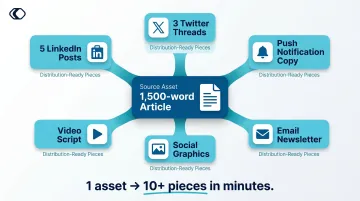
Example workflow: A financial institution publishes a 1,500-word thought leadership article on UPI payment trends. AI auto-generates:
- 5 LinkedIn posts highlighting key statistics
- 3 Twitter threads with bite-sized insights
- Push notification copy for mobile app users
- Email newsletter summary with call-to-action
One source asset becomes 10+ distribution-ready pieces in minutes.
Pillar 2: Intelligent Distribution and Scheduling
AI-powered distribution removes manual posting overhead:
- Auto-scheduling: Publishing content to the right channels at optimal times based on historical engagement data
- Format adaptation: Adjusting tone, length, and structure per platform (formal LinkedIn copy vs. conversational Instagram captions)
- Triggered messaging: Sending push notifications and email alerts to reach audiences before they search
Onboarding push notification series increase first-month app retention by 34%, yet many teams still schedule notifications manually or skip them entirely due to bandwidth constraints.
Example: A media house publishes breaking news. AI auto-distributes:
- Full article to website
- Summary push notification to mobile app subscribers
- Social posts to Twitter, Facebook, LinkedIn at peak engagement windows
- Email alert to newsletter subscribers
Total manual intervention: zero. Time to full distribution: under 2 minutes.
Pillar 3: SEO and AI Search (GEO) Optimisation
Traditional SEO focuses on ranking in Google's organic results. Generative Engine Optimisation (GEO) structures content to surface in AI-powered answer engines like Google AI Overviews, Perplexity, and ChatGPT search.
On-page SEO automation includes:
- Keyword density analysis
- Header structure validation
- Internal linking suggestions
- Readability scoring
These checks happen during content creation, not as post-production cleanup.
GEO structuring requires different techniques:
- Citing authoritative sources with clean attribution
- Adding statistics and quotations AI engines can extract
- Structuring content in scannable, answer-focused formats
- Optimising for featured snippet and knowledge panel eligibility
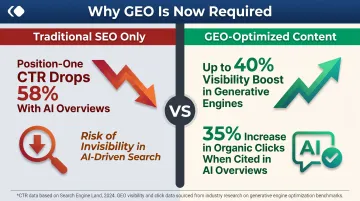
Research from Princeton and Georgia Tech shows GEO strategies can boost visibility in generative engine responses by up to 40%.
Why this matters now: AI Overviews reduce position-one organic click-through rates by 58%. Content not optimised for AI citation risks invisibility regardless of traditional ranking. Yet brands cited in AI Overviews see a 35% increase in organic clicks versus those not cited. GEO opens new traffic pathways even as traditional click-through rates fall.
Pillar 4: Analytics and Performance Feedback Loops
AI-powered analytics closes the loop by:
- Tracking content performance across traffic, engagement, conversions, and rankings
- Surfacing actionable insights: which topics drive ROI, which formats outperform, and where keyword gaps remain
- Feeding data back into the creation and planning layer so the system improves over time
Most teams measure performance but don't systematically act on it. Only 51% of B2B marketers measure content performance effectively, and 56% struggle with ROI attribution. That gap is where connected analytics makes the difference. Performance data from distribution and engagement automatically informs the next content brief, keyword selection, and format prioritisation.
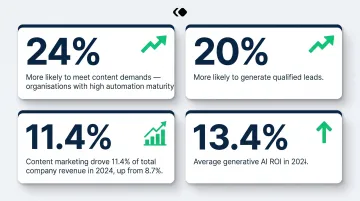
Organisations with high automation maturity are 24% more likely to meet content demands and 20% more likely to generate qualified leads.
Building an AI Content Operations Workflow: A Step-by-Step Approach
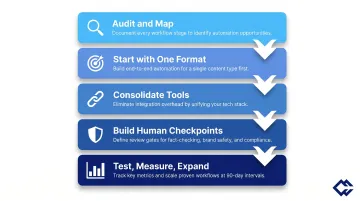
Step 1: Audit and Map Your Current Process
Before automating, document every step:
- Brief creation and research
- Drafting and editing
- Approval and formatting
- Publishing, social distribution, and email send
- Performance tracking
Identify where the most time is lost and where errors occur. One organisation discovered 27 different ways teams were producing content from start to finish. Automate the highest-friction, most repetitive steps first.
Step 2: Start with One Content Type and Build End-to-End
Once you know where friction lives, pick a single standardised format — weekly newsletters, news articles, or product update posts — and automate every stage for that type before expanding. Validate time savings and quality, then scale to additional formats.
Step 3: Consolidate Tools to Reduce Integration Overhead
Fragmented tool stacks create integration tax. Martech utilisation has dropped to 49%, and 59% of CMOs report insufficient budget to add more tools.
Platforms that natively connect content creation, distribution, and analytics eliminate external automation stitching. Publive, for instance, consolidates AI content generation, social distribution, push notifications, and analytics into a single system built for Indian media houses and BFSI institutions. The result: up to 60% faster content output, with no separate vendors to manage across CMS, scheduling, SEO, and reporting.
Step 4: Build Human-in-the-Loop Checkpoints
Define where human review is non-negotiable:
- Fact-checking for news and compliance-sensitive content
- Editorial tone and brand voice alignment
- Legal or regulatory approval for BFSI communications
Automated volume without governance compounds errors at scale. Only 4% of marketers report high trust in AI outputs, underscoring the need for review checkpoints.
Step 5: Test, Measure, and Expand Systematically
With checkpoints in place, shift focus to measurement. Track production metrics first:
- Time per piece (before vs. after automation)
- Content volume per week
- Revision rounds required
Then layer in performance metrics to assess content impact:
- Traffic growth
- Engagement rates
- Search ranking improvements
Use data to justify expansion to additional content types, languages, or channels. Set 90-day benchmarks rather than expecting immediate returns.
Maintaining Quality and Brand Voice at Scale
The Brand Voice Degradation Problem
Brand voice degradation is the most common failure mode. When prompts are generic or AI outputs aren't anchored to brand-specific style guides, content becomes homogeneous and loses editorial identity.
Solution: Create detailed prompt templates and style guidelines that train the AI on your specific voice, terminology, and tone. Feed the AI examples of on-brand content, preferred phrasing, and editorial no-go zones.
Editorial Governance Structure
Establish clear quality standards before scaling:
- Define which content types can publish autonomously vs. what needs senior editorial sign-off
- Map escalation paths so errors are flagged, corrected, and don't repeat
- Assign ownership of the prompt library and brand style guidelines to a named role
Without these guardrails in place, errors compound quietly across hundreds of published pieces — and governance is also what makes fact accuracy enforceable at scale.
Fact Accuracy and Trust
For media publishers, BFSI institutions, and healthcare organisations, AI-generated content must pass structured fact-checking. Only one-third of the public believe journalists always verify AI output, creating a trust deficit.
Build accuracy review into the workflow without making it the bottleneck. Automate first drafts and research aggregation — but require human verification before publishing any claim involving statistics, legal statements, or medical advice.
Measuring the ROI of Your AI Content Operations
Track Production Metrics
- Average time-to-publish per content type
- Cost per piece (including human review time)
- Total content volume per week or month
- Revision rate (how many drafts before approval)
These four numbers give you a baseline — without them, any claimed savings are just estimates. Once AI workflows are running, the same metrics reveal exactly where time and money are actually being recovered.
Track Performance Metrics Tied to Business Outcomes
- Organic search traffic growth
- Audience engagement rates (time on page, scroll depth, social shares)
- Lead generation or conversion from content
- Search ranking improvements for target keywords
Content marketing drove 11.4% of total company revenue in 2024, up from 8.7% in 2023. When content volume scales through automation and revenue follows, the investment case becomes straightforward to defend.
Set Realistic Timelines
Workflow automation ROI typically becomes measurable within 2-3 months of consistent operation. Compounding gains—improved AI outputs, better prompt libraries, more data-informed decisions—accumulate over 6-12 months.
The average ROI for generative AI in content operations was 13.4% in 2024, up from 12.3% in 2023. Set 90-day benchmarks and expect incremental improvement rather than overnight results.
Frequently Asked Questions
What are examples of AI automation in content operations?
Auto-generating article drafts from keyword briefs, repurposing blog posts into social captions and push notifications, AI-scheduling content to optimal posting times across channels, and automated performance reporting that feeds insights back into content planning.
How does AI content automation help scale content without increasing team size?
AI handles high-volume, repetitive execution tasks—drafting, formatting, scheduling, and reporting—allowing existing team members to focus on strategy and editorial oversight. This effectively multiplies output per person without adding headcount.
Can AI automation maintain brand voice and editorial quality at scale?
Yes, provided teams invest in detailed prompt engineering, brand style guides fed into the AI, and human review checkpoints at critical stages. Quality at scale requires deliberate workflow design, not just the right tools.
What's the difference between AI content automation and just using an AI writing tool?
An AI writing tool addresses one step (drafting). Automation connects the full content lifecycle: ideation, creation, SEO optimisation, distribution, and analytics, so each stage flows into the next with minimal manual handoffs.
How do I measure the ROI of AI content automation?
Track production metrics (time saved per piece, cost per piece, volume increase) alongside business performance metrics (traffic growth, engagement, conversions). Compare them against pre-automation baselines at 90-day intervals to calculate ROI.
Is AI content automation suitable for media publishers and news organisations?
Yes. It's particularly well-suited for media given volume demands, multilingual requirements, and multi-channel distribution needs. Human editorial oversight for accuracy, breaking news context, and compliance remains essential.